Closed Doors, Narrow Grounds: Auditing a Council's Case for Private Session
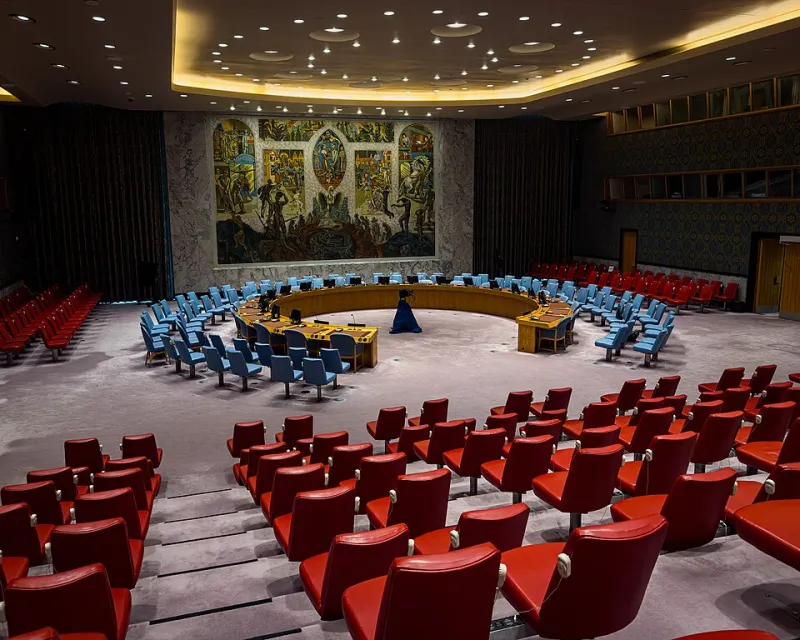
Photo: Jdforrester, CC BY 4.0, via Wikimedia Commons
Open any council agenda in England and you will find them: items marked Part 2, or accompanied by a note that the public and press will be excluded. Sometimes the reason is compelling. A looked-after child's circumstances, a live prosecution, advice protected by legal professional privilege — all of these can justify a closed session. But the grounds are narrower than the frequency of their use suggests, and the decision to exclude is itself a decision that can be examined, questioned and, occasionally, overturned.
Two tests, not one
The statutory framework sits in the Local Government Act 1972, principally section 100A and Schedule 12A. Before the public can be excluded from a meeting, the council must pass a resolution, and that resolution must rest on two separate findings.
First, the information to be discussed must fall within one of the paragraphs of Schedule 12A — the list of categories that can qualify as exempt information. Second, a properly designated officer, usually the monitoring officer, must have given the reasonable opinion that disclosing the information would not be in the public interest. Only when both conditions are met can the room be cleared, and even then only for the part of the item that genuinely requires it.
That second limb is the one most often skipped in public explanation. An agenda entry that reads simply exempt — commercial tells you nothing about the balancing exercise that the law requires. Openness is the default; exclusion is the exception, and the public interest test exists precisely to make that hierarchy visible.
What actually qualifies
The Schedule 12A categories most commonly relied upon are these:
- Paragraph 1 and 2 — information relating to an identified individual, or information likely to reveal their identity.
- Paragraph 3 — information relating to the financial or business affairs of a particular person, including the council itself.
- Paragraph 4 — information about consultations or negotiations in connection with terms and conditions of employment.
- Paragraph 5 — information covered by a claim to legal professional privilege.
- Paragraph 7 — information connected with the prevention, investigation or prosecution of crime.
Note what is missing from that list. There is no general category for sensitive, difficult, politically awkward, or likely to attract attention. Commercial confidentiality is not automatic either: the fact that a contractor would prefer a figure unpublished does not, by itself, satisfy paragraph 3, and it certainly does not settle the public interest balance. Nor does a report's designation as confidential carry the same meaning as exempt — the former has a specific and much narrower statutory definition, confined largely to information supplied to the council by a third party who could sue for breach of confidence, or where disclosure is barred by another statute.
Wording that should prompt a question
Several habits recur often enough to be recognised on sight. A resolution to exclude the public for an entire meeting, rather than for a discrete item. An item withheld in full when only a schedule within it is genuinely protected. Reasons recorded after the event rather than in the notice. Documents listed as background papers that are themselves unavailable. An agenda in which the same paragraph number appears against a dozen unrelated matters.
None of these is automatically unlawful. Together, however, they suggest that the exclusion has become routine rather than reasoned.
Before the meeting
Start with the notice. Executive meetings are governed by the Local Authorities (Executive Arrangements) (Meetings and Access to Information) (England) Regulations 2012, which require agendas and reports to be published five clear days ahead. If a report is withheld, the notice should say so, identify the paragraph relied upon and explain why publication is said to be against the public interest.
If that explanation is absent or formulaic, write to the monitoring officer before the meeting. Ask three precise questions: which paragraph of Schedule 12A applies; what specific harm to the public interest has been identified; and whether the item can be taken partly in public. A freedom of information request for the record of the officer's opinion is a reasonable follow-up, though advice covered by legal professional privilege may properly be withheld.
During the meeting
The public's most effective intervention comes before the resolution is put. When the chair reaches the item, you are entitled to ask the committee to confirm the paragraph relied upon and to state, on the record, how the public interest has been weighed. Ask whether the item can be split so that the discussion stays open while only the sensitive component is taken in private. Ask for the vote on the exclusion resolution to be recorded.
Councillors are not obliged to agree with you, and the chair may decline. But a refusal, captured in the minutes, is a useful artefact. It fixes the reasoning at the moment of decision, rather than allowing it to be reconstructed later.
After the meeting
The minutes should record that the exclusion resolution was passed and which paragraph was used. That obligation is not decorative — it is the mechanism by which the decision can be audited. Beyond the minutes, background papers relating to the decision should be listed and, where they are not exempt, made available for inspection.
Three routes follow. A complaint to the monitoring officer tests whether the council followed its own constitution and the statutory procedure. A complaint to the Local Government and Social Care Ombudsman can address procedural maladministration, though the ombudsman will not re-run the merits of the decision. And where the exclusion appears to breach the statutory requirements outright, judicial review is available — but the time limit is short, generally promptly and in any event within three months, so advice should be taken quickly.
A short working checklist
Read the notice; check the paragraph; check the public interest explanation; write to the monitoring officer; object on the record before the resolution; ask for a recorded vote; and obtain the minutes. Five of those six steps take less than an hour. The sixth is simply persistence.
Representation is not only exercised at elections. It is exercised every time a resident asks a council to justify closing a door.