Promises With a Paper Trail: Locating the Developer Money Owed to Your Area
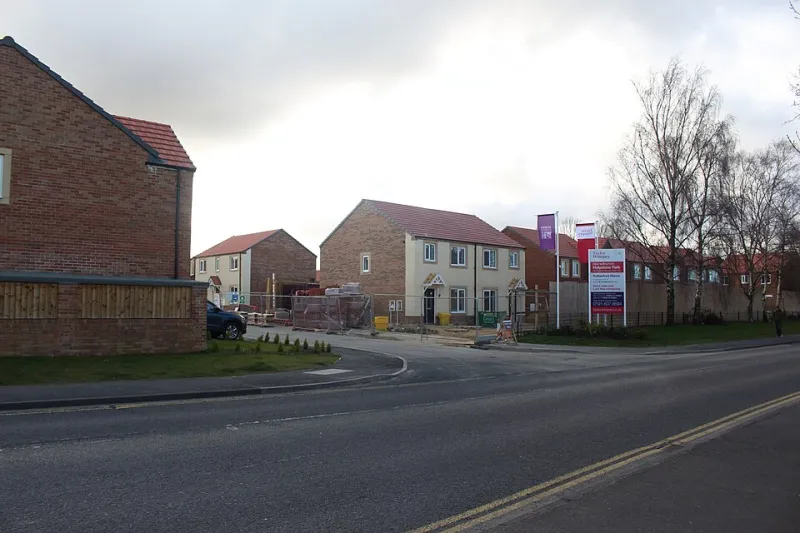
Photo: Graham Robson , CC BY-SA 2.0, via Wikimedia Commons
A planning permission is rarely just a permission. Attached to it may be a package of obligations: a sum toward additional school places, a contribution to a junction improvement, a tranche of affordable housing, a travel plan, a maintenance payment for a new play area. These promises are legally binding, recorded in a deed, and often worth more to a neighbourhood than anything else the council does that year. They are also, in many places, surprisingly difficult to follow.
What follows is a route through the paperwork — how to find the obligations attached to a development near you, how to match them against what has actually been paid and spent, and what to ask when the trail runs cold.
Two mechanisms, often confused
The first is the planning obligation, usually made under section 106 of the Town and Country Planning Act 1990. It is negotiated between the council and the developer, and for it to be lawful it must be necessary to make the development acceptable in planning terms, directly related to the development, and fairly and reasonably related in scale. A section 106 agreement may require payments, but it may also impose works, restrictions or land transfers.
The second is the Community Infrastructure Levy, established under the Planning Act 2008 and governed by the Community Infrastructure Levy Regulations 2010. The levy is a charge on new floor space, applied according to a published charging schedule, and it is spent on infrastructure rather than tied to a single site. Most authorities that charge it retain a meaningful proportion for the neighbourhood in which development occurs — a point worth remembering, because that money may be devolved to a parish council you can actually speak to.
They behave differently and are accounted for differently, but for a resident they answer the same question: what did the development promise, and what has been delivered?
The documents that should already exist
Begin with the planning application itself. Most councils publish the decision notice, the officer's report and, increasingly, the completed section 106 agreement on their planning portal. Search by application reference or by the site address. If the deed is not online, request it — a written request under the Freedom of Information Act 2000, or the Environmental Information Regulations where the material engages environmental matters, will usually produce it. Ask specifically for any deeds of variation, because obligations are frequently renegotiated after permission is granted, and the amended terms are what now bind.
The second document is the council's infrastructure funding statement. Regulation 121A of the 2010 Regulations requires charging authorities to publish an annual statement by 31 December, and since December 2021 that statement must cover section 106 receipts and expenditure as well as levy money. A compliant statement will show sums received, sums spent, the balance unspent, and the projects to which allocations have been made. It is the single most revealing document in this field, and it is frequently buried several clicks deep on a council website.
Third, check the local land charges register. Planning obligations can be registered as local land charges, so a search against the property or site may reveal obligations that never made it onto the council's own register.
Reading an agreement properly
A section 106 deed is not a single promise. It is a schedule of separate covenants, each with its own machinery. Look for the trigger that starts each obligation — often occupation of a given number of dwellings, or commencement of development. Look for the indexation clause, which usually adjusts the sum over time and can change the figure substantially. Look for the deadline for payment and, crucially, for any clause allowing the sum to lapse or be repaid if the council has not spent it within a stated period.
On affordable housing, check the tenure split and whether the units were to be delivered on site or commuted into a financial contribution. A commuted sum is lawful in some circumstances, but it converts a visible promise into an invisible one, and it deserves scrutiny.
Matching obligations to schemes
With the agreement in hand, the reconciliation begins. Compare the schedule of contributions against the infrastructure funding statement, then against the council's capital programme and any cabinet reports authorising expenditure. Where a contribution was intended for a specific school expansion or highway scheme, ask whether that scheme was delivered, deferred or deleted.
Three patterns recur. Money is collected but sits unallocated in a holding account. Money is allocated but spent on a purpose looser than the original obligation. Or money is returned to the developer under a repayment clause after the council fails to identify a project within the deadline. The third is the most damaging and the least discussed.
Questions worth putting in writing
A short, specific enquiry is far harder to deflect than a broad complaint. Consider asking:
- What is the current unspent balance of section 106 contributions relating to this ward, listed by agreement?
- For each contribution, what is the trigger, the amount adjusted for indexation, and the deadline for expenditure?
- Has any contribution been repaid or is any repayment pending?
Send them to the planning department and to the cabinet member with responsibility for planning. Copy your ward councillors. If the answers are incomplete, the scrutiny committee is the appropriate forum, and the annual infrastructure funding statement offers a neutral place to start the discussion.
Developer contributions are not a windfall. They are the price of permission, negotiated on the understanding that the neighbourhood absorbs the impact. Following them is one of the more concrete forms of accountability available to a resident — and unlike many, it leaves a paper trail.