Written Before You Arrive: Getting Your Issue Onto the Scrutiny Work Programme
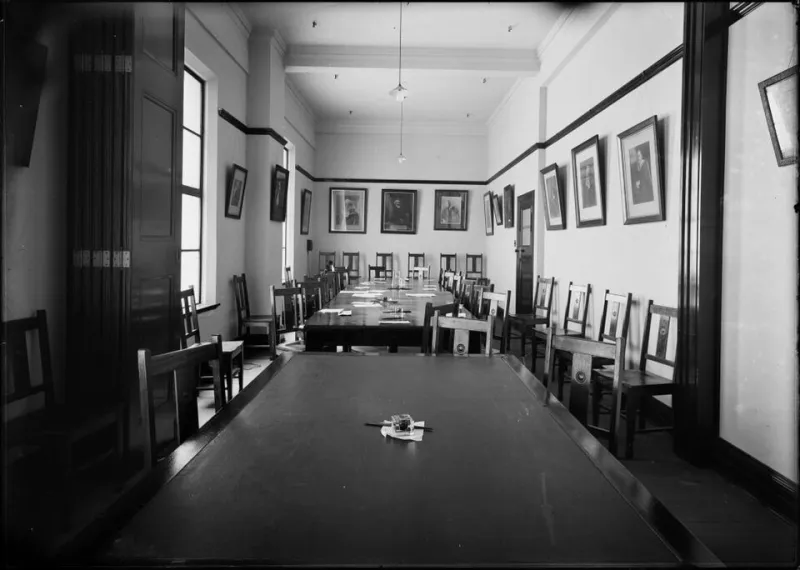
Photo: Powerhouse Museum from Sydney, Australia, Public domain, via Wikimedia Commons
Of all the rooms in a council building, the scrutiny committee is the one most often described as powerful and least often used by the public. Its formal reach is considerable. It can require officers to attend and answer. It can examine decisions taken by the executive, and in many authorities call them back for reconsideration before they take effect. It can conduct reviews that reshape a service. What it cannot do is invent its own agenda at short notice, because the agenda is set in advance, by a process that begins long before the first public meeting of the municipal year.
Understanding that process is the difference between a request that lands and one that disappears into a mailbox.
What scrutiny is for
Overview and scrutiny committees were established under the Local Government Act 2000 and reshaped by the Localism Act 2011. Their statutory purposes are to hold the executive to account, to review decisions and to contribute to policy development. Each authority must designate a statutory scrutiny officer, whose job includes supporting the committee and promoting the scrutiny function.
In practice, committees vary enormously. Some meet monthly with a defined work programme and a research officer. Others meet three times a year, take officer presentations and ask few questions. The variation is not usually a matter of rules; it is a matter of culture and capacity. That is precisely why the work programme matters. A committee that has committed to a topic in writing is far more likely to pursue it than one asked to improvise.
How the work programme is built
The programme is normally agreed once a year, often at the first meeting after the annual council meeting in May, and refreshed at a mid-year point. It is drafted by the scrutiny officer in consultation with the chair and vice-chair, informed by the council's corporate priorities, the cabinet's forward plan of key decisions, budget timetables, external inspection findings and any items that councillors have asked to be referred.
Two details are easy to miss and both are consequential. First, the forward plan of key decisions is published and is one of the few genuinely predictive documents a council produces — it tells you what the executive intends to decide, and when. Second, many authorities operate pre-decision scrutiny, in which a committee examines a proposal before the cabinet decides. That is the moment of maximum influence, and it is almost always under-subscribed.
The calendar to work to
If you want a topic considered in the coming year, the letter should arrive in the early spring, before the annual programme is drafted. A mid-year addition needs to land six to eight weeks before the refresh meeting. Requests submitted after a decision has been taken can still succeed, but the committee's leverage is reduced to reviewing something already done.
Making the case
A committee chair receives a great many requests, most of them about a single unresolved case. The ones that secure a slot share a shape.
Frame a question, not a grievance. Why has the council's housing repairs backlog risen for three consecutive years is a scrutiny topic. My kitchen has been unrepaired since March is a complaint, and belongs in the corporate complaints process instead.
Show it is systemic. Two or three comparable cases, a trend in published performance data, a pattern visible in freedom of information responses. Committees respond to evidence that a problem is structural rather than personal.
Keep it within scope. Scrutiny committees cannot generally examine individual planning or licensing decisions taken in a quasi-judicial capacity, matters subject to live legal proceedings, or individual staffing matters. Nor should a request be framed in party political terms; a neutral committee will not adopt a partisan cause.
Propose the mechanics. Suggest the witnesses you would like called — a named service director, a partner organisation, a residents' group. Suggest a single evidence session rather than an open-ended review. Suggest what the committee might recommend at the end. A request that arrives with a workable plan takes far less officer time than one that has to be designed from scratch.
Connect it to the council's own promises. Cite the corporate plan commitment, the statutory duty or the performance indicator that the issue engages. Scrutiny officers are pragmatists; a topic that ties to an existing priority is easier to justify in a programme.
What to send, and to whom
The statutory scrutiny officer is the right first recipient, with copies to the chair of the relevant committee, the vice-chair, and your ward councillors. Ask for the item to be considered at the next work programme setting meeting and for your submission to be included in the papers.
There is also a councillor route. Councillors can refer matters to scrutiny, and in many authorities a defined number can requisition a review. A residents' group with a councillor willing to sponsor the request will often find the door opens faster than a letter from an individual. Parish and town councils can also make representations, and their backing carries weight in two-tier areas.
Inside the room, and after
If the topic is accepted, attend the evidence session and prepare a short written submission in advance. Committees work better with documents than with speeches. Ask questions through the chair, and press for specific recommendations with named owners and dates.
If it is refused, ask for the reasons in writing and for the decision to be minuted. Refusals are themselves a form of accountability data: a pattern of declining to examine a persistent service failure is a legitimate subject for the full council, for the statutory scrutiny officer's annual report, and for the local press.
Scrutiny is not a court and it will not resolve an individual case. It is a lever, and like all levers it works only when someone applies pressure at the right point. The work programme is that point.