The Rejected Packet: Inside Postal Vote Verification — and the Three Checks That Save Your Ballot
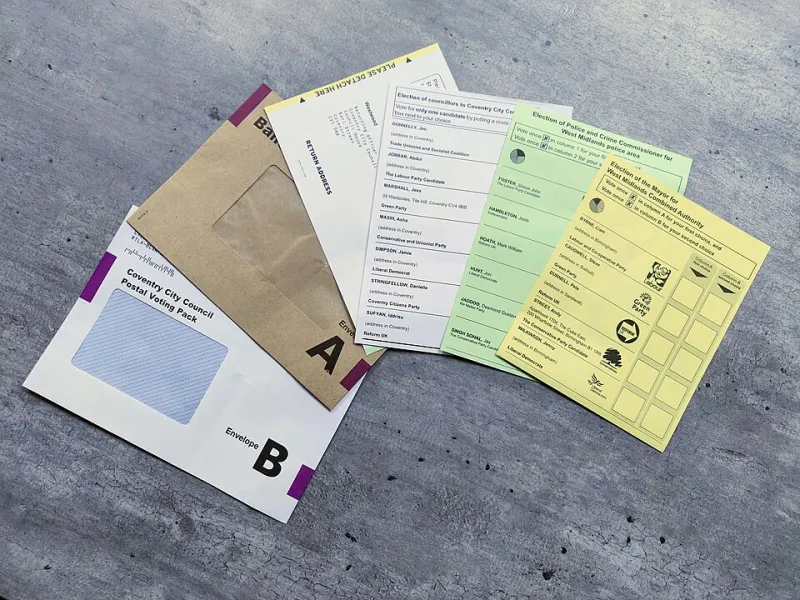
Photo: domdomegg, CC BY 4.0, via Wikimedia Commons
Postal voting has become the quiet default for millions of electors across the UK. It suits shift workers, people who travel, residents in rural areas and anyone who would rather not queue in a polling station in November weather. Yet every cycle, returning officers reject thousands of postal vote packets. The reasons are rarely dramatic. A signature that no longer matches the one on file, a missing date of birth, a packet that arrives after the close of poll: these are the small administrative failures that turn a vote into a statistic.
The rejected packet is not merely a personal inconvenience. It is a civic accountability problem. If postal votes are rejected at different rates in different places, and if councils do not publish the reasons, the public cannot tell whether the system is working fairly. This guide explains what happens inside the verification process, sets out the three checks that prevent most rejections, and ends with the question residents should be asking their electoral services team.
What happens when your packet reaches the centre
A postal vote does not go straight to a counting table. It goes to a postal vote opening centre, where staff work in teams under the supervision of the returning officer. The outer envelope is opened first. Inside is the postal vote statement, which carries the elector's signature and date of birth, and the ballot paper. The statement is separated from the ballot paper so that the vote remains secret.
The statement is then scanned or examined by staff. The signature is compared with the signature held on the elector's registration record. The date of birth is checked against the same record. If both match, the ballot paper is accepted for counting. If there is a discrepancy, the packet is set aside for a second check. A supervisor or a small adjudication team may look at it again. The process is evidence-led, not suspicious, but it is unforgiving of paperwork that is incomplete.
The critical deadline is the close of poll. A postal vote that arrives after 10pm on polling day cannot be counted, however genuine the vote. That is why the timing of your return is as important as the mark on your ballot paper.
The three failure points that account for most rejections
The first is a signature mismatch. Signatures change over time. An elector who registered years ago may now sign with a different flourish, a different surname or a hand affected by age or illness. The verification team is not comparing your signature with a fresh specimen; it is comparing it with the one on your registration record. If the difference is significant, the packet may be rejected.
The second is an incomplete postal vote statement. The statement must be signed and must carry your date of birth. A missing date of birth, an unsigned statement or a statement completed by someone else can all cause rejection. At the application stage, missing or incomplete identity or witness information can also stop a postal vote being issued in the first place. By the time the packet is in your hands, the main risks are the statement and the signature.
The third is late arrival. Postal services are generally reliable, but a packet posted on the last day may not arrive in time. Returning officers cannot accept a postal vote after the close of poll, even if it was postmarked earlier. The date of arrival, not the date of posting, is what matters.
Check one: sign as you did on the register
Before you seal the envelope, look at the signature you are about to provide and ask whether it resembles the one you gave when you registered. If your signature has changed materially, contact your electoral registration office before the next poll. You may be able to update your record. If you have a disability or illness that makes signing difficult, ask about the signature waiver process. Do not assume that a scribble will be accepted because it is recognisably yours; the test is whether it matches the record.
Check two: complete the statement, not just the ballot
The ballot paper is only one part of the packet. The postal vote statement must be complete. Sign it, provide your date of birth, and check that you have not left any required field blank. Use the official envelope provided. Do not add extra enclosures. If you make a mistake, contact your electoral services team for advice rather than guessing. A spoiled ballot paper is a wasted vote; a spoiled statement can be a rejected vote.
Check three: return early and use the official route
Return your packet as soon as you have completed it. Use the official return envelope and the route specified by your council. If you are handing it in rather than posting it, check the council's guidance on where and when it can be accepted. Do not rely on a campaigner or a friend to deliver it unless you understand the rules on handling postal votes. The safest approach is to post early or deliver directly to the electoral services office during opening hours.
The accountability question: what gets published about rejected packets
Here is where individual diligence meets collective scrutiny. Most councils publish turnout figures and the number of postal votes issued. Far fewer publish the number of postal votes rejected, broken down by reason. Without that data, residents cannot see whether rejection rates are rising, whether particular communities are affected, or whether the verification process is consistent.
You can ask for it. A request to the returning officer or the council's electoral services team can seek the number of postal votes issued, returned, accepted and rejected at the most recent poll, together with the reasons for rejection. A freedom of information request may be appropriate if the information is not already published. The request does not need to be elaborate. It needs to be specific: the poll, the council area, the categories of rejection, and the time period.
Returning officers are required to retain certain records, and the Electoral Commission issues guidance on postal vote handling. But publication is uneven. A council that publishes rejection data is not admitting failure; it is showing that it takes the integrity of the ballot seriously. A council that does not publish it leaves residents with anecdotes instead of evidence.
Small checks, public consequences
The postal vote is a private act with a public consequence. Three checks - signature, statement, timing - will prevent most rejections. But the wider lesson is that rejection is not only a personal mistake. It is a system outcome that should be measured, published and debated. The next time you seal a postal vote, run the three checks. Then ask your council what happened to the packets that did not make it through.