From Kitchen Table to Committee Room: Making Your Evidence Count in Westminster
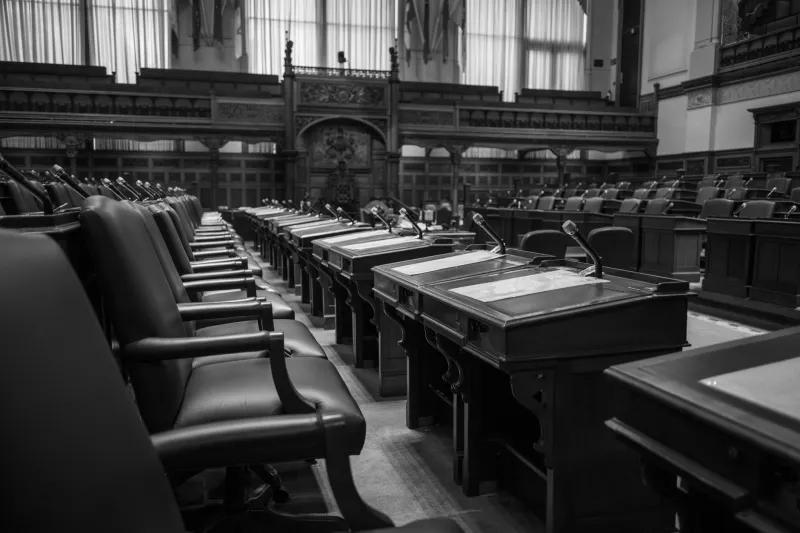
Parliament’s public face is the chamber: the despatch box, the division bell, the set-piece debate. Its working face is quieter. Along the committee corridor, small groups of MPs and peers take evidence, publish documents and produce reports that can shift the terms of a policy argument. For a constituent who wants to put a case on the record, select committees are one of the few formal routes into Westminster that do not require a vote, a lobbyist or a party membership.
This guide explains how that route works in 2026: how inquiries are launched, how written evidence is handled, and how to judge whether a committee’s recommendations have led to anything more than a press release.
Why the corridor matters
Select committees are cross-party groups. Departmental committees shadow the work of government departments; others examine public accounts, standards, intelligence or the constitution. They choose their own inquiries, call for written evidence, question ministers and officials, and publish reports. Their recommendations are not legally binding, but government departments are expected to respond. Reports can feed debates, shape media coverage and give MPs a shared factual base.
The committee corridor’s informal power lies in that combination: publicity, precedent and persistence. A committee cannot order a minister to change policy. It can, however, make a problem harder to ignore. For a constituent, a well-evidenced submission can put a local case into the national record, prompt a question in an oral evidence session and sometimes become a paragraph in a report that ministers must answer.
How an inquiry begins
Most inquiries start with a committee deciding its terms of reference. These set out the questions the committee wants to explore. A call for evidence is then published on the committee’s page on the UK Parliament website, usually with a deadline and an online submission form. Some inquiries are broad; others are narrow and time-limited. Committees can also accept late evidence, but it carries less weight once members have begun taking oral evidence.
Take a recent inquiry by the Housing, Communities and Local Government Committee into local authority financial resilience. The terms of reference asked how councils reach financial distress, whether oversight arrangements are working, what transparency exists over spending decisions, and what preventive measures might be needed. A resident in a council area that had issued a section 114 notice could submit evidence. The strongest submission would not simply say that the council was failing. It would set out a timeline, cite published budget papers, identify the decisions that reduced reserves, and explain the effect on a specific service. That kind of evidence gives the committee something it can test: a sequence of events, a set of documents and a clear link to the inquiry’s questions.
What happens to written evidence
Committee staff read submissions and group them by theme. Members use the material in briefing packs, questions and private deliberations. A small number of contributors may be invited to give oral evidence; many more will have their written evidence published on the committee’s website. Publication is normal, and names are usually attached unless there is a clear reason for anonymity.
The most useful submissions are concise. A committee may receive hundreds of pages. A two- to four-page document with a short summary, clear headings and supporting evidence is more likely to be read closely than a long account without structure. Members are not a court and clerks are not caseworkers. They are looking for patterns, examples and arguments that help them scrutinise government.
After oral evidence, the committee publishes a report. The government must usually respond within two months. That response is the first test of whether recommendations have bite. A second test is whether the issue returns: in a follow-up inquiry, a letter from the committee chair, a debate or a later report. Committees often measure their influence in small increments rather than dramatic victories.
A checklist for usable evidence
- Read the terms of reference first. Answer the questions the committee has actually asked, rather than the ones you would prefer it to ask.
- Lead with who you are and why your experience is relevant. One short paragraph is enough.
- Separate personal experience from opinion. Use dates, documents, correspondence and figures where you can. Redact personal data before submitting.
- Keep it concise. Use headings and bullet points. A short annex for documents is better than a long narrative.
- Say what you want the committee to ask or recommend, but do not demand a particular outcome. Committees respond to evidence, not instructions.
- Check the deadline and the submission method. Use the committee’s online form where possible.
- Assume publication. Do not include confidential information about yourself or others unless the committee has agreed to handle it differently.
- Avoid party-political language. A neutral, factual tone travels further in a cross-party committee.
- Track the inquiry after you submit. Watch for published evidence, oral evidence sessions, the report and the government response.
Where evidence stops short
Select committees are not a complaints service. They cannot resolve an individual benefit decision, overturn a planning permission or award compensation. For those routes, constituents should look to their MP, the Local Government and Social Care Ombudsman, the Information Commissioner’s Office or legal advice. Committees examine patterns and policy; they do not adjudicate individual cases.
That limitation is also a strength. Because committees are not deciding a case, they can hear from people whose experience illustrates a wider problem. A submission from a resident, a frontline worker or a small business can become part of a national inquiry when it is framed carefully. In 2026, with government majorities and crowded legislative timetables, that quiet route into the committee corridor remains one of the more accessible forms of parliamentary scrutiny available to an engaged citizen.