The Empty Opposition Bench: Auditing Accountability in One-Party Councils
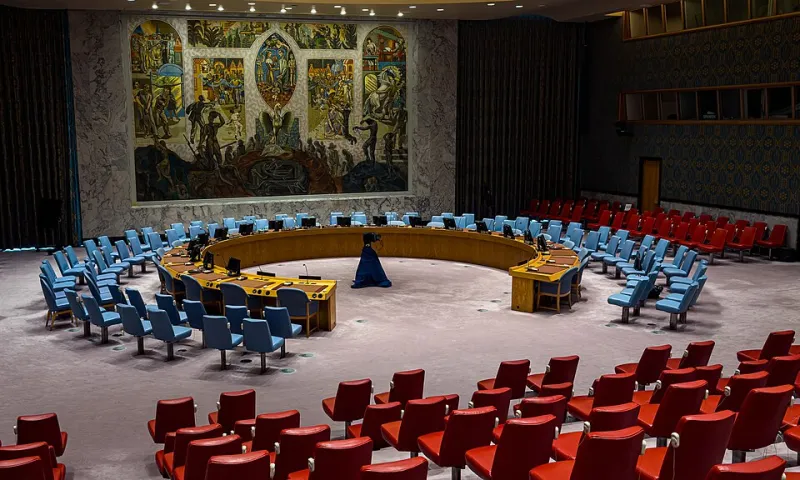
Photo: Jdforrester, CC BY 4.0, via Wikimedia Commons
Single-party control is not unusual in British local government. A council can return a large majority for one group while still operating a competent, transparent administration. But a large majority changes the incentives inside the chamber. When the result of most votes is known in advance, formal opposition has less leverage, scrutiny can become a procedural exercise, and the most persistent check on the ruling group may come from outside the town hall. Residents then become the outside opposition.
The question for 2026 is not whether one party wins a council. That is a matter for voters. The question is whether the council can show its work: whether decisions are explained, alternatives are tested, and public scrutiny has consequences. This guide sets out how to audit that in practice.
Why a large majority changes the scrutiny question
A dominant group is not automatically a closed one. Strong leadership can produce clear priorities and stable administration. But the normal checks in a council assume that opposition votes matter and that scrutiny has an audience. Where one group controls most seats, those checks need deliberate maintenance.
Look for the difference between accountability that is exercised and accountability that is managed. Exercised accountability leaves a trail: questions are answered in writing, reports are published before decisions, scrutiny recommendations receive a reasoned response, and budget alternatives are costed. Managed accountability often looks busy but leaves little trace. Meetings happen; decisions remain unexplained.
Read the balance of power first
Start with the council's constitution and committee membership. Establish how many seats each group holds, who sits in the cabinet or executive, and who chairs overview and scrutiny. In some councils, scrutiny chairs are drawn from the ruling group; in others, opposition members chair them. Neither arrangement is automatically wrong, but it affects how much independence residents should expect.
Check the council's forward plan of key decisions. Is it specific enough to tell you what is coming? Are reports published with enough time for residents and backbench councillors to read them? A forward plan that says little, or changes at short notice, is an early warning that decisions are being taken with limited public preparation.
Public question time is a forcing function
Public question time varies across councils, but its value is simple: it forces a written or oral answer onto the record. Submit questions in advance where the rules allow, keep them precise, and ask about a decision rather than a general principle. For example: what evidence supported the change; what consultation took place before the decision; what alternatives were considered; and what performance measure will be used to judge the result.
Keep a log of the question, the date, the answer and any follow-up. If answers are evasive, ask again in a narrower form. The aim is not to score a point in the meeting. It is to build a public record that shows whether the council can justify its choices.
Scrutiny committees: follow the agenda, not the title
Overview and scrutiny committees are often described as the council's engine room. In a one-party council, the test is whether they can set their own work programme, call for evidence before a decision is made, and secure a response from the executive when they recommend change.
Read the agenda papers rather than the press release. Ask who chose the topic, whether officers or cabinet members produced the evidence, and whether the committee is reviewing a decision after it has been taken or before. Pre-decision scrutiny is not a guarantee of influence, but post-decision scrutiny is a weaker instrument. Track what happens to recommendations. A recommendation that is accepted, rejected or amended with reasons is evidence of a working process. A recommendation that disappears is evidence of something else.
The budget is where a majority is tested
A council budget is the clearest statement of its priorities. It is also the moment when a large majority is most exposed to public examination. Budget amendments are not only for opposition parties. Residents can ask what alternatives were costed, what assumptions sit behind savings targets, and what the impact will be on specific services.
Request the budget papers early. Compare the draft and final versions. Ask for the equality impact assessments, the reserves position and the delivery risks in plain language. If an amendment is proposed, ask for its costings and its consequences. A majority that can explain why it rejected an alternative is more accountable than one that never had to consider it.
Use the local record, including local media
Accountability depends on a record that residents can find. Council webcasts, minutes, reports and decision notices are the basic materials. Local media, where it survives, can amplify them, but residents should not wait for coverage. Send documents to local reporters, community newsletters and residents' associations. Publish your own summary of what was asked and what was answered.
Freedom of information requests can fill gaps, but they are slower than good meeting records. The first step is to use the material the council should already be publishing. If key reports are missing, late or heavily redacted, that is itself a finding.
Warning signs that accountability is being managed
Several patterns suggest that scrutiny is being contained rather than exercised:
- Public questions are grouped, truncated or answered only in general terms.
- Scrutiny agendas are dominated by information items and avoid live decisions.
- Reports arrive too late for meaningful reading or are withheld until after the decision.
- Key decisions are taken in private, or with short public notice, without a clear legal justification.
- The forward plan is vague and changes frequently.
- Scrutiny recommendations are not tracked or receive no formal response.
- The audit committee lacks independent members or a clear route to report concerns.
- Consultation is announced after the policy direction is already fixed.
None of these signs proves bad faith. Together, they show that the council's accountability machinery may be running without producing accountability.
A four-step resident audit
First, map the power: seats, cabinet, committee chairs and the forward plan. Second, choose one live decision and trace it from report to vote. Third, use the formal routes: a public question, a deputation, a scrutiny submission or a budget representation. Fourth, publish what you learn, including the answers you did not receive.
A dominant council is not automatically a closed one. But a majority that never has to explain itself is a representation problem. Residents can supply the scrutiny that numbers deny. The test is whether the council responds with reasons, records and consequences. Where it does not, the outside opposition has its evidence.