The Ballot Box Divide: How Voter ID Refusals Vary by Council in 2026
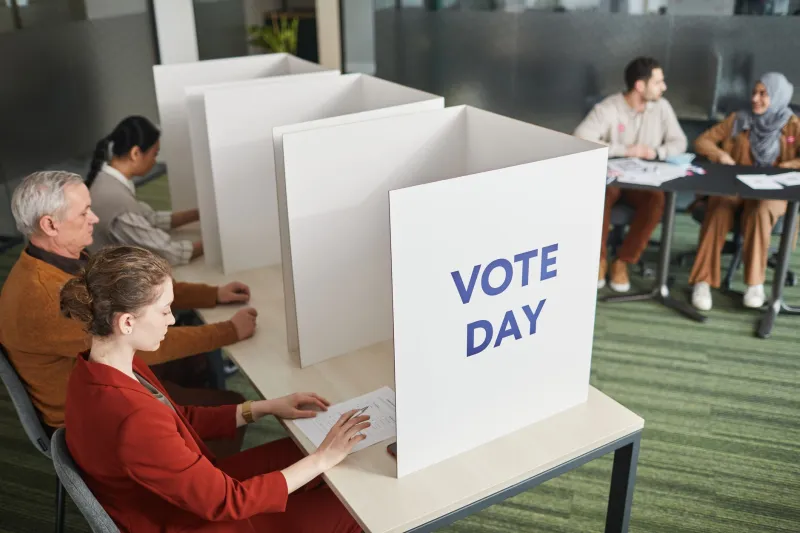
In May 2026, voters in many parts of England will again be asked to show photo ID before receiving a ballot paper. The requirement is set by Westminster. The experience of meeting it is shaped by town hall decisions: how polling stations are staffed, how clearly the rules are explained, how many Voter Authority Certificates are processed, and how refused voters are recorded. That gap between a national rule and local administration is where a postcode lottery can emerge.
A uniform rule, an uneven experience
The Elections Act 2022 introduced the photo ID requirement for polling stations in England. Accepted documents include a passport, driving licence, certain concessionary travel passes, and the free Voter Authority Certificate. The law is the same in every council area. The implementation is not.
Returning officers run the poll. Electoral registration officers maintain the register and handle certificate applications. Councils decide where polling stations go, how staff are trained, what signage is displayed, and how data is kept. A well-run station with experienced presiding officers and clear notices may refuse very few voters. A station with a last-minute staff change, poor signage, or a queue at 7am may produce a different result.
This is not an argument about whether ID checks are legitimate. It is a question of administration. A democratic system should be able to show that every eligible voter who wants to vote can do so, and that any refusal is recorded and reviewed.
What the 2026 returns can reveal
After an election, councils and the Electoral Commission publish data on turnout, rejected ballots, and the operation of voter ID. The useful questions are not only 'how many were refused?' but 'refused where, at what time, and with what follow-up?'
In England there is no provisional ballot of the kind used in some other systems. A voter who arrives without accepted ID is not given a ballot paper at that point. They may return later with accepted ID before the close of poll. Some councils record the initial refusal and the later admission separately. Others do not. That difference matters: a raw refusal figure can overstate the number of people who ultimately could not vote, while a final refusal figure can understate how many people were turned away at the desk.
Data on Voter Authority Certificate applications is also important. A high number of applications may show that a council is reaching people who lack ID. A high number of rejected applications may show that the process is difficult to navigate. A low number of applications in an area with many older or disabled residents may show that awareness is poor. None of these figures proves discrimination on its own. Together, they point to where scrutiny is needed.
Requesting the returning officer's data
Start with the council's published election results and any post-election report. Then submit a freedom of information request to the council's electoral services team. The request below can be adapted. Keep it specific, ask for data in spreadsheet form, and give a clear date range.
Under the Freedom of Information Act 2000, please provide the following information for the [May 2026 local elections] in your area:
- The number of electors refused a ballot paper at a polling station because they could not produce an accepted form of photo ID, by polling district.
- The number of those electors who later returned with accepted ID and were issued a ballot paper, where recorded.
- The number of Voter Authority Certificate applications received, granted and refused, and the reasons for refusal.
- Any polling station-level logs or summaries of ID-related refusals, including time of day and staff notes, with personal data redacted.
- Copies of training materials and guidance issued to presiding officers on voter ID.
- Any equality impact assessment or post-election review of voter ID implementation.
If some information is held but exempt, please cite the exemption and explain how the public interest test has been applied.
If the council says it does not hold the data, ask which body does. If it says the data is not recorded at polling district level, ask what level is recorded and why. If it applies a commercial or personal data exemption, ask for a redacted version or aggregated totals.
Three tests for any spreadsheet
First, check the denominator. A refusal rate should be compared with the number of electors in the polling district and with turnout. A ward with 1,000 electors and 300 voters is not directly comparable with a ward of 5,000 electors and 2,000 voters.
Second, check the category. Does the figure mean 'turned away at the desk' or 'did not return'? Does it include people who returned with ID later? Does it include people who were redirected to a Voter Authority Certificate? A good dataset separates these.
Third, check the pattern. Look for clusters by polling station, time of day, disability, age, or language. Look at whether the council's certificate application rate matches the profile of residents who are less likely to hold a passport or driving licence. Ask the council what it did in response.
What to do if you see a barrier
If you are refused a ballot paper, ask the presiding officer to record the refusal and explain what ID would be accepted. Note the polling station, the time, and what you were told. Report the incident to the council's electoral services team and to the Electoral Commission. If you are able to return with accepted ID, do so before 10pm and ask for the later admission to be recorded.
RepresentUs is collecting accounts of barriers at the ballot box so that local patterns can be compared. A single refusal may look like an administrative slip. A cluster of refusals in one polling district, or a council that cannot say how many voters were turned away, is a governance issue. The right response is not a slogan. It is a request for the record, a comparison with the data, and a demand that the returning officer explain what happened.
The postcode lottery in voter ID is not inevitable. It is produced by choices about training, resources, and transparency. The 2026 elections give voters a chance to test those choices with evidence rather than anecdote.