Four Ways to Remake the House of Lords — and What Each Does to Your Vote
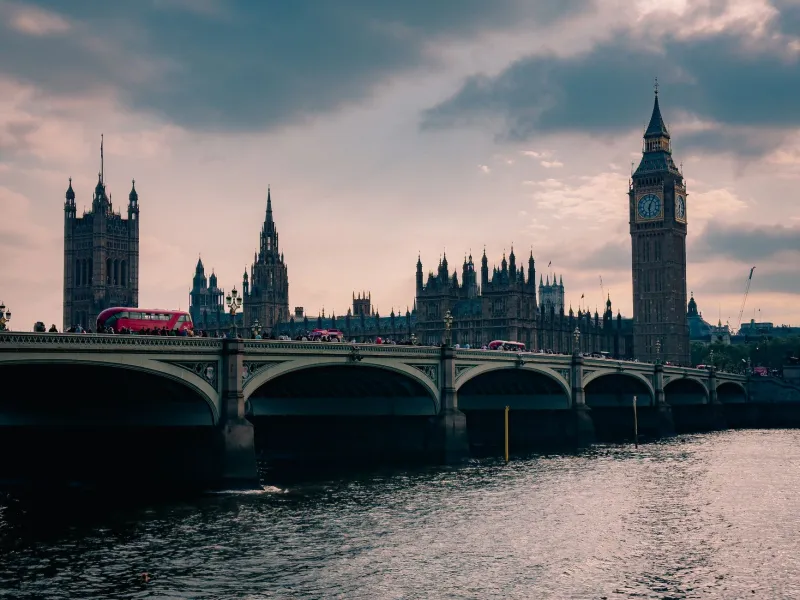
The House of Lords is unelected, but it is not powerless. It scrutinises bills, questions ministers and can ask the Commons to think again. Reform proposals return because the chamber's authority rests on appointment rather than a ballot. The argument in 2026 is less about whether the Lords should change than about what each model would do to representation, scrutiny and the balance of the UK's constitution.
Why the second chamber matters to your vote
The Lords can amend legislation, delay some bills and examine detailed policy through its committees. It also scrutinises statutory instruments, the regulations that give effect to many laws. Because members are appointed, the chamber's democratic legitimacy is indirect. Reform would not simply change a building full of peers; it would alter how law is made, how regions are represented and how far voters can hold the second chamber to account.
Model one: abolition
Abolition would remove the House of Lords and leave a unicameral Parliament at Westminster. Supporters argue that an appointed chamber has no place in a modern democracy and that the Commons already carries democratic legitimacy. Critics warn that abolishing the Lords would concentrate power in the executive, weaken scrutiny of detailed legislation and lose the crossbench expertise on which committees rely. For voters, abolition would mean no second chamber elections and no appointed legislators. Representation would run almost entirely through constituency MPs. That may strengthen the local link, but it would reduce the number of national figures able to examine government from outside the governing party.
Model two: a wholly elected chamber
A wholly elected second chamber would give the Lords a direct democratic mandate. Elections could use proportional representation in large regional or national constituencies, with fixed terms and a cap on size. This would improve regional balance if seats were allocated by nation and region, and it would make the chamber answerable to voters. The trade-offs are substantial. A second elected chamber may claim equal legitimacy with the Commons, creating deadlock. Elections cost money. Party lists can reduce the independence of crossbench experts. Your vote would change if you were given a separate ballot for the second chamber. The design of the electoral system would determine whether that vote translates fairly into seats.
Model three: a mixed elected and appointed chamber
A mixed model would combine elected members with appointed independents, perhaps with a majority elected and a minority chosen for expertise. This is often presented as a compromise: it preserves a route for specialists and former public servants while giving the chamber a democratic element. The risk is a two-tier chamber in which elected members claim greater legitimacy than appointed ones. Regional balance would depend on how elected seats are distributed. Your vote would matter for the elected share, but not for the appointed share. The appointment process would need to be transparent, with an independent commission and published criteria.
Model four: a largely expert-appointed senate
A senate model would keep appointment as the main route but make it more independent, smaller and more clearly expert. An appointments commission could select members for fixed, non-renewable terms, with no party majority and a statutory duty to reflect the UK's nations and regions. Supporters argue that this preserves technical scrutiny and continuity while removing hereditary peers and reducing party patronage. Critics say it remains unelected and therefore weakly accountable. Your vote would not decide the chamber's membership, though you could hold ministers responsible for the appointment framework. Regional balance would depend on the commission's remit rather than on ballots.
The trade-offs at a glance
| Model | Representational effect | Scrutiny effect | Regional balance | What happens to your vote |
|---|---|---|---|---|
| Abolition | All representation through the Commons | Risk of weaker detailed scrutiny and fewer expert committees | Depends on Commons boundaries and devolution | No second chamber ballot |
| Wholly elected | Direct mandate for the second chamber | Strong democratic scrutiny but possible deadlock | Can be designed by region or nation | A separate election, likely by proportional representation |
| Mixed elected and appointed | Combines democratic and expert elements | Retains some specialist expertise | Depends on the elected share and regional design | Vote for elected members only |
| Expert-appointed senate | Indirect accountability through appointments | Strong technical scrutiny and continuity | Depends on statutory appointment criteria | No direct vote on membership |
Questions to put to your MP in 2026
Constitutional reform is often discussed in broad principles. Specific questions expose the practical choices.
- Which of the four models do you support, and what powers would the reformed chamber have relative to the Commons?
- If the chamber is elected, what electoral system would be used, how large would constituencies be and how long would terms last?
- How would the model protect regional balance across England, Scotland, Wales and Northern Ireland?
- What would happen to the remaining hereditary peers, the Lords Spiritual and crossbench appointments?
- How would you prevent deadlock and preserve the primacy of the elected Commons?
- What is the transition timetable, and what would reform cost the public purse?
- How would the new chamber scrutinise statutory instruments and delegated legislation?
- Would the change be in a party manifesto and subject to a referendum, a citizens' assembly or public consultation?
The choice beneath the choice
Each model answers a different question. Abolition asks whether the UK needs a second chamber at all. A wholly elected chamber asks whether democratic legitimacy should trump expertise. A mixed chamber asks whether the two can coexist. An expert senate asks whether independence can be designed without a ballot. None is cost-free. The right questions for 2026 are not only about the composition of the Lords, but about the kind of representation voters want and the scrutiny they expect between elections.